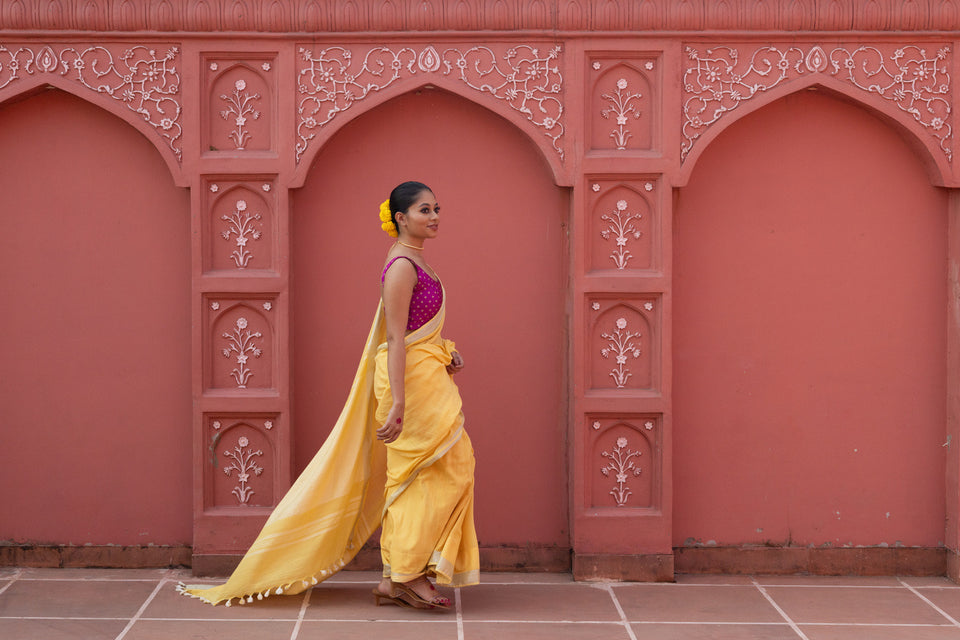
Nearly five thousand years of history
Sari-like drapes date back to the Indus Valley, around 2800 BCE. First cotton, dyed with indigo and turmeric. Then silk. Then gold thread.
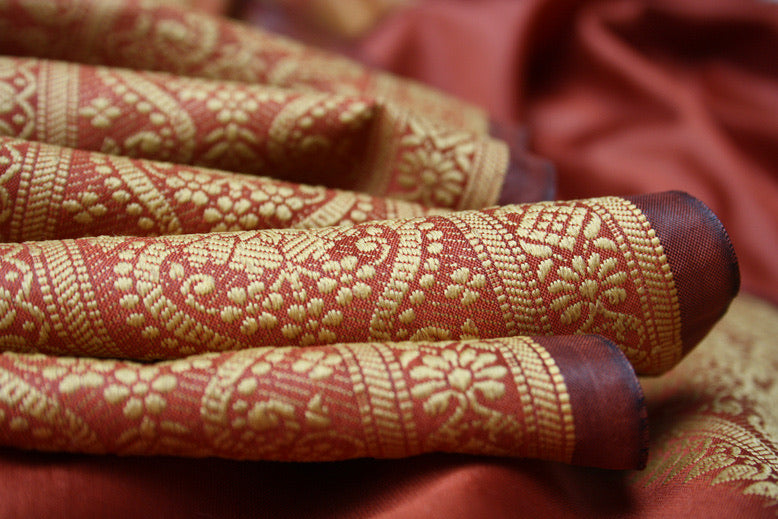
How it's made
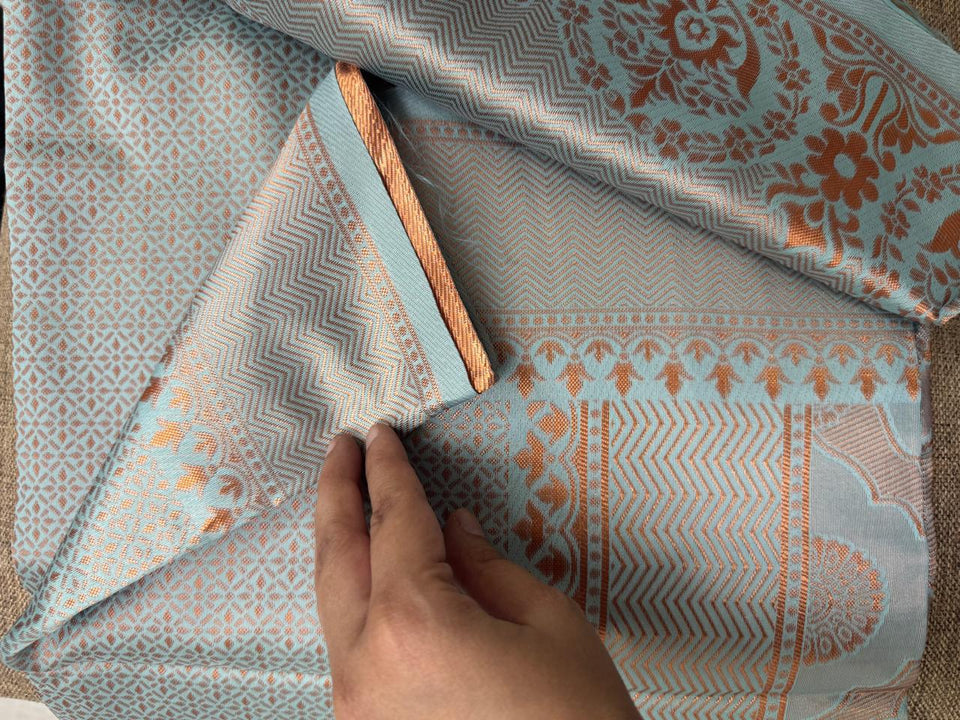
Sari-like drapes date back to the Indus Valley, around 2800 BCE. First cotton, dyed with indigo and turmeric. Then silk. Then gold thread.
Red for a bride. Luck, love, a beginning.
Paisley for abundance. The lotus for purity. The peacock for grace.
Nobody taught us. We grew up knowing.
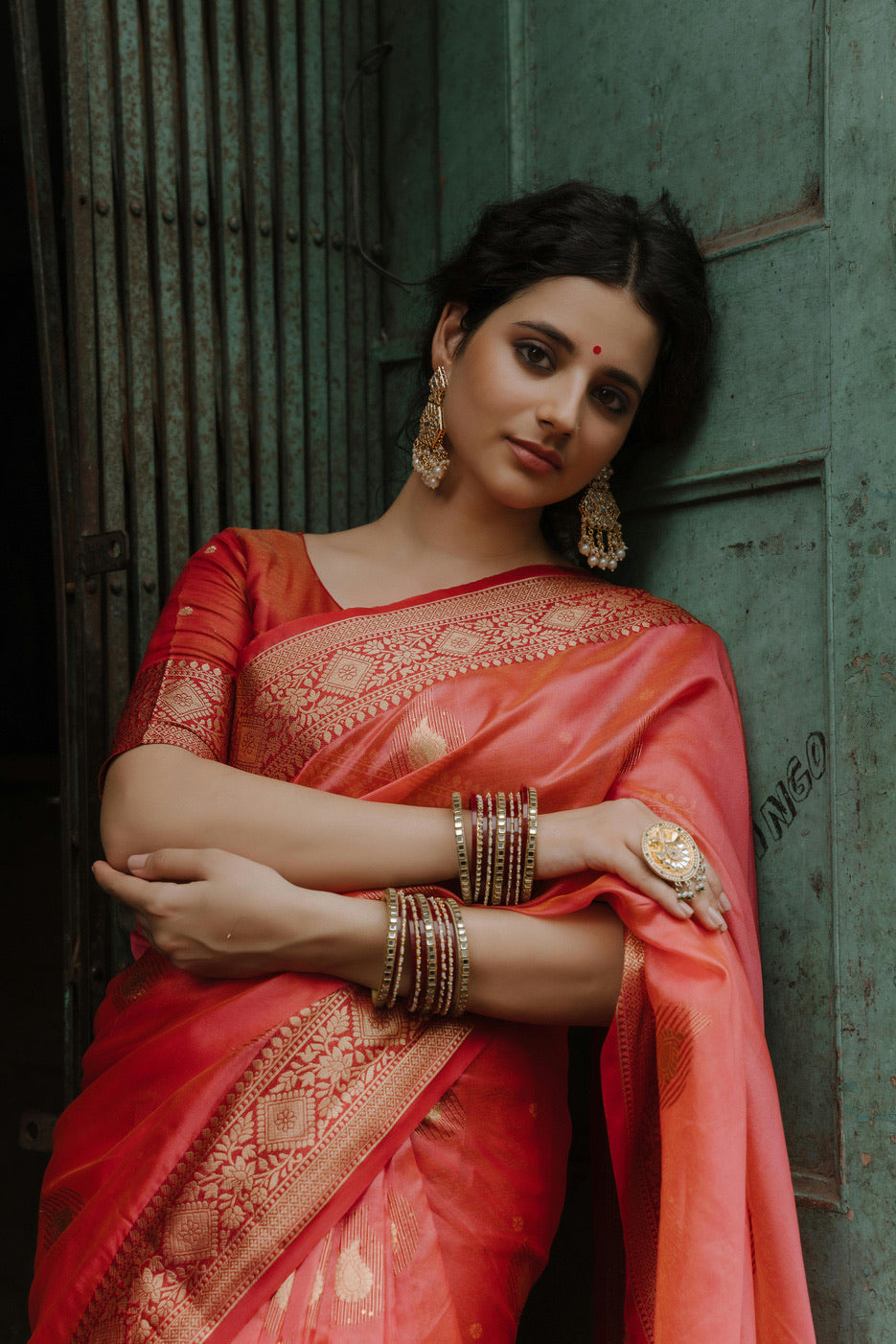
From 1860, indentured Indians were brought to South Africa. My family was among them.
They carried little. The saree came with them.
In the diaspora it became what you wore when it mattered. Weddings. Prayers. Goodbyes. Passed from mother to daughter.
I loved my gran's Kanjivaram silk sarees. I even wore Kanjivaram silk on my wedding day.
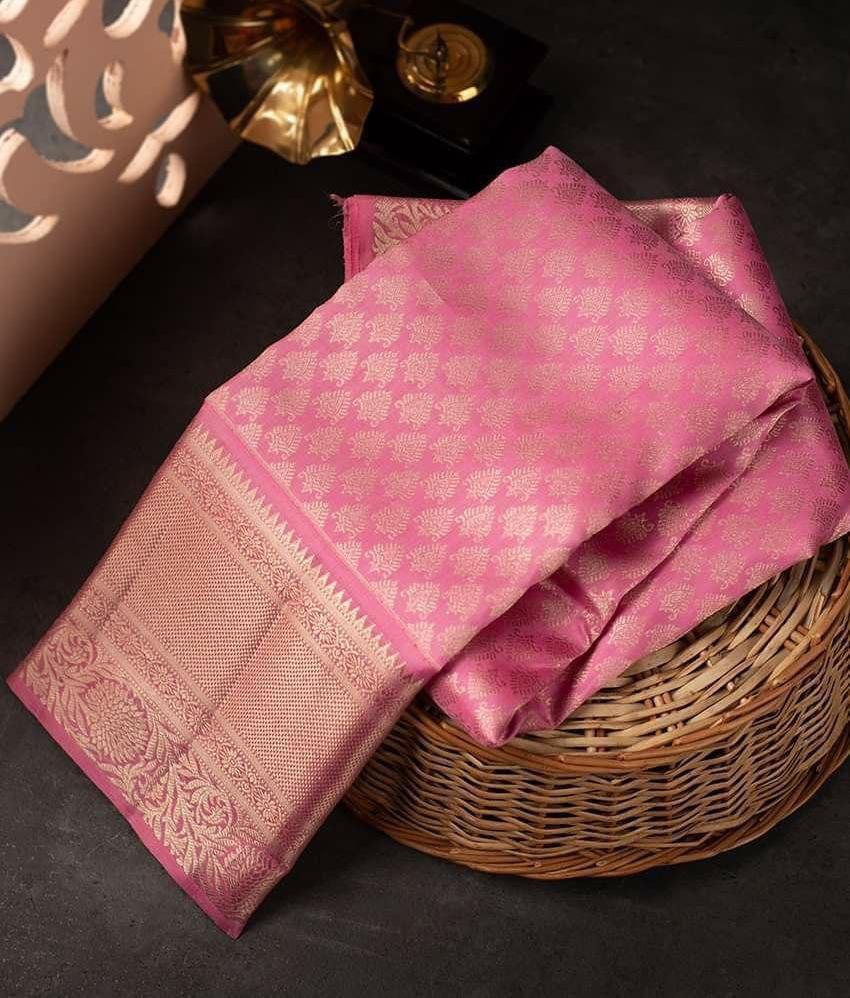
For years, I never asked how those sarees were made. Honestly, I was hiding under a rock.
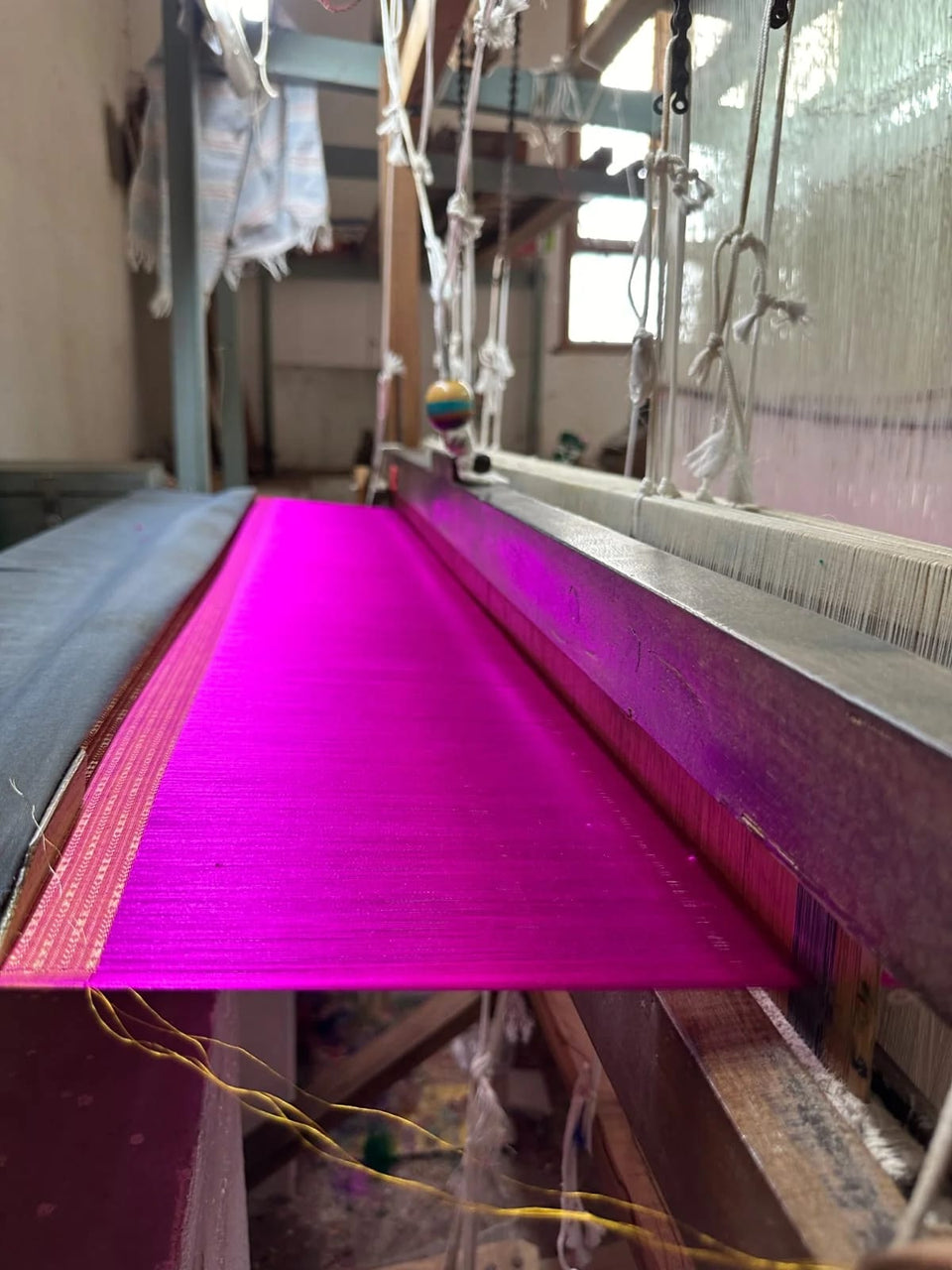
Starting Shikra changed that. I began asking where fabrics come from and how they're made. Questions I'd never thought to ask.
Traditional silk means boiling the cocoon with the silkworm still inside. We wanted the drape without that.
Our sarees are made from wood fibres. Cruelty-free, start to finish.
Made in Italy. Made in France. Made in the UK. The world says these proudly. So why does made in India still get a pause?
Luxury fashion uses Indian craft, fabrics and hands more than ever. The credit rarely follows.
That's why I started Shikra London. To put Indian craft front and centre, and always say where it comes from.
Every piece is now made in India.
A jacket. A dress. A corset.
It won't look like your gran's saree. It still carries the meaning.
Like us, it crossed oceans and learned to belong in more than one place.
It changed shape. It never forgot where it came from.